Chapter 06
The tracks
Every kind of node has its own track. This chapter goes through them in the order they appear on the timeline. Each entry says what the node does in the world, what you set on it, and what to watch for.
Two words come up throughout:
- A range node has a start and an end. It does something for as long as the playhead is inside it.
- A point node has only a start. It does one thing at that moment.
When two nodes on the same track overlap and both want the same object or the same viewer, Dreamer Pro decides. Most tracks pick one winner: the earlier start, then the longer node, then the lane with the higher number, then a conditional node over an unconditional one. Lint tells you who wins on those tracks. A few tracks have their own rule, given in their section: Cue, Skybox, Mat-swap, Presence, Aerobics and Vision FX.
Cue#
A Cue puts an object on stage between its start and end. The object is turned on at the start and off at the end, with an entrance effect on the way in and an exit effect on the way out.

Settings on the General page: the Object.

Settings on the Transition page, the panel's second tab: the In Effect and Out Effect, each None, Spin, Bounce, Fly, Scale or Shake; a Style for each effect, and once you pick a Style other than Classic, a strength slider, plus a direction and pivot for Spin; a Fly In and Fly Out direction for Fly; "Colliders off during motion" so nothing bumps the viewer while the object flies; Sound In and Sound Out, which create a sound that plays with the transition; and "Show before the dream starts" for a cue that touches the very start.
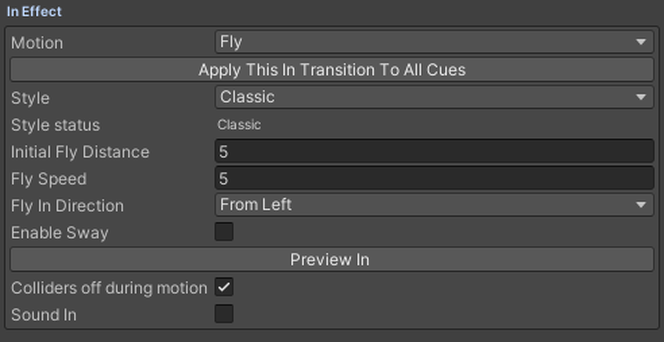
Watch for: the object should be turned off in the scene before the Dream starts. Dreamer Pro turns it on and off. If it starts on, viewers see it before its time. To keep an object on stage to the end, push the cue's end past the end of the Dream. Fly needs a direction; if you clear it, the object appears in place with no motion. Shake amounts are in meters, so start small.
Two Cues on the same object: the object stays on stage while either plays, and the later start decides where it is.
FX#
An FX node keeps an object moving for as long as it plays: Hover, Pulsate, Sway, Jitter, Rotate and Orbit, alone or together.

Settings: the Object; a Starting Recipe; each behavior with its own values, such as height and speed for Hover, frequency for Jitter, angle and axis for Sway, radius and speed for Orbit, and for Orbit a "Return to Origin" switch so the object comes back to where it started; a Style; Reseed for a fresh random pattern.
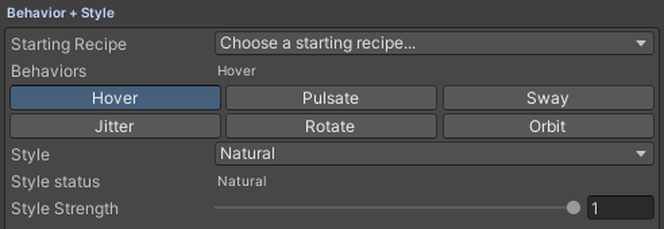
An FX node can be linked to a Cue on the same object, so it plays only while the object is on stage. The Cue's panel offers "Create New Linked FX" and "Link Existing FX". An unlinked FX on an object that is not in any Cue needs that object to be on already.

Watch for: Pulsate scales from the size the object has in the scene when the Dream loads, or from its moved size while a Move is holding it. FX plays on top of a Move, so a moved object keeps its new place with the FX layered on.
Skybox#
A Skybox node changes the sky at its start. The sky stays changed until the next Skybox node. At any moment the sky is the latest Skybox node at or before the playhead, so scrubbing and joining late land on the right sky. The sky does not come back on its own when the Dream ends. Put a Skybox node at the end that sets the world's own sky if you want it back.

Settings: the Skybox material; the Type, Cut or Spin; the transition length for Spin.
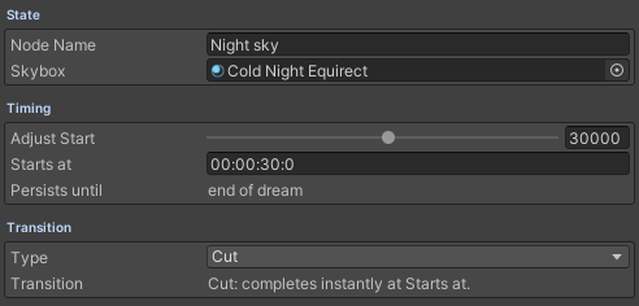
Watch for: Spin needs a sky material with a rotation setting. A material without one does not turn: Spin still waits out the transition time and swaps the sky at the halfway point. Make a Skybox node conditional to give one viewer a different sky from everyone else.
Teleport#
A Teleport moves every viewer in the Dream to a destination at its start. They land in a formation.

Settings: the Destination transform, facing the way you want viewers to face, and Show Scene Gizmos to draw the formation in the Scene view.

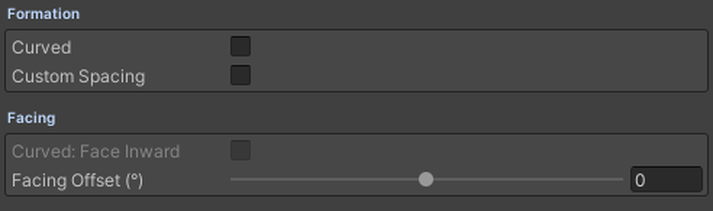
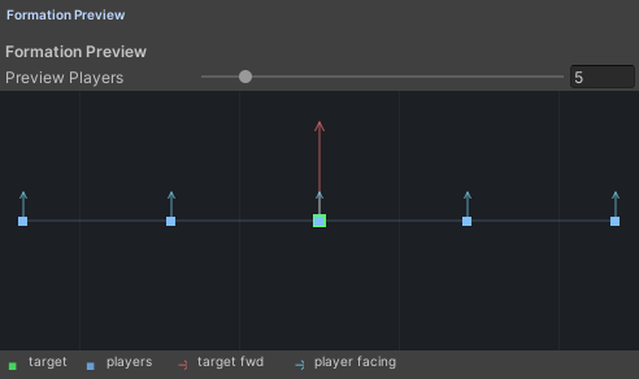
Under Formation and Facing: Curved, on for a curve with a radius and an angle span facing inward or outward, off for a row, with Custom Spacing for the gap between people; and a Facing offset.
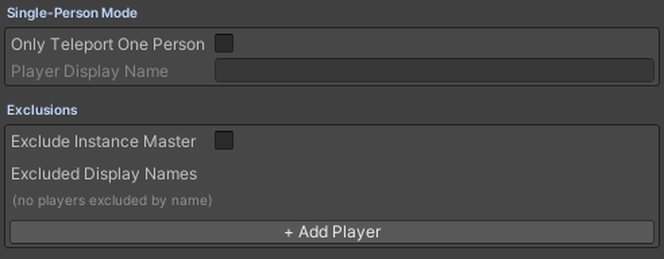
Under Single-Person Mode and Exclusions: "Only Teleport One Person" to move one named person; Exclusions by display name; and "Exclude Instance Master".
Formation Preview draws the row or curve in the panel. Preview Players sets how many people it draws, in the panel and on the Scene gizmo.
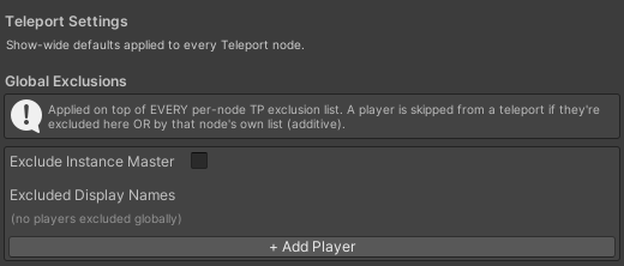
Right-click the TP track's label for show-wide exclusions. Those names are skipped on every Teleport node, on top of each node's own list.
Watch for: in a world with one Dream and no zone, a teleport moves everyone in the instance. Give the Dream a zone and it moves only the people in that Dream. A conditional or single-person teleport lands its person on the Destination without a formation. Dragging the time bar in the world does not teleport you while you drag; the teleport lands when you let go. A teleport that falls inside a Camera shot does not happen at all. It is skipped, not saved for later.
Mat-swap#
A Mat-swap changes the material of an object at its start. The object wears the material of the latest Mat-swap at or before the playhead, and its original material before the first one. It keeps the last swap after the Dream ends, so add a Mat-swap back to the original if you want it returned.

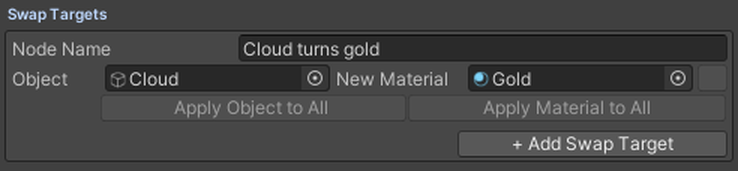
Settings: one or more Swap Targets, each an Object and a New Material; Apply Object to All and Apply Material to All fill every target at once.
Watch for: the object needs a renderer. Only the first material slot changes. Changing a material breaks static batching for that object, so do not swap on anything marked Batching Static.
Sound#
A Sound node plays an audio clip. Dreamer Pro makes and manages the audio source for you. See the Sound and Voice chapter for the whole picture.
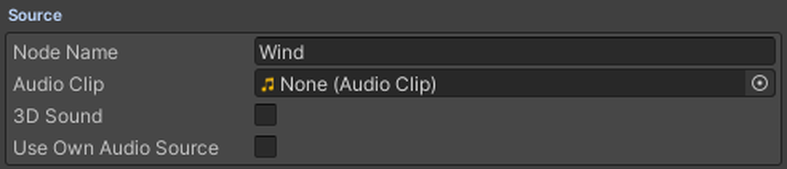
Settings: the Audio Clip; Play For, how long it plays, where 0 plays the whole clip once, or loops to the end of the Dream when Loop is on; Volume; Loop; and 3D Sound, which plays it from a place in the world instead of everywhere.
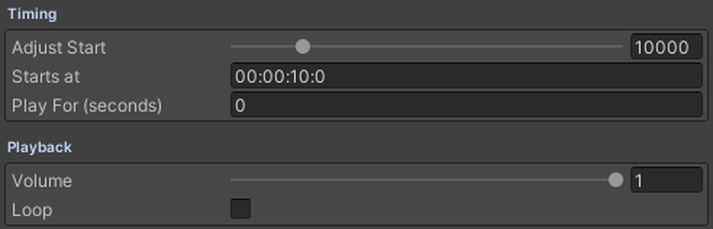
Watch for: sounds follow the video. Pausing or scrubbing pauses them, and they resume at the matching offset. A sound with no clip plays nothing and Lint says so.
Move#
A Move glides an object to a target position, rotation and scale, holds it there, and can bring it back.

Settings: the Object and "Colliders off during motion"; then where to go, as a position, rotation and scale, or a Go To transform.
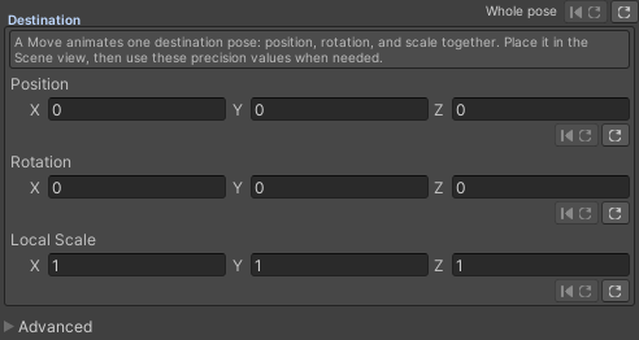
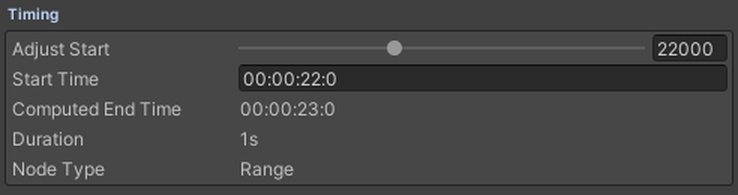
Under Motion: Smooth Move Start with its Start Duration; Include Rotation and Include Scale, set once for the way out and again for the way back; Return When Done with its Return Duration and Move Back To Starting Position; Hold Duration, how long the object stays put, and when Return When Done is on, the length of the whole move with the ease-in and ease-back carved out of it; and Smooth Move End. If the ease times do not fit inside the hold, the extra is cut. The node's Computed End Time shows how long the whole move takes.
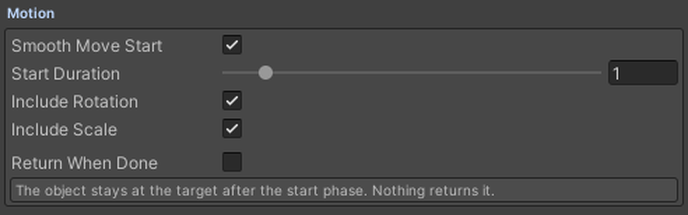
With Smooth Move Start and Return When Done both off, a Move is a point node: the object jumps. Turn either on and it becomes a range node whose phases you can drag on the timeline. The panel's Node Type row tells you which you have.
Watch for: an FX on the same object plays on top of the Move.
Aerobics#
An Aerobics node changes how a viewer can move while it plays.

Settings: Lock, two switches set separately, Block Walking and Block Jump.

Then Custom Movement, with walking, running and strafing speeds and jump strength. Each speed has its own switch, so a node sets only what you turn on. A Lock greys out its own matching speed.
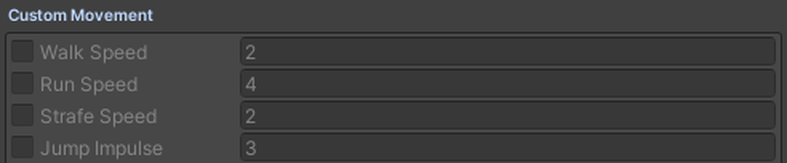
Watch for: two Aerobics nodes at the same time compose. Each one sets only the things it sets, so there is no single winner. When the node ends, the viewer's movement returns to normal.
Text#
A Text node shows text in front of each viewer.
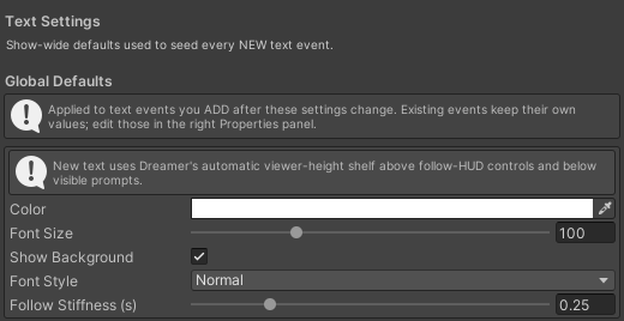
Settings: the text; its color, size and style; and Show Background.
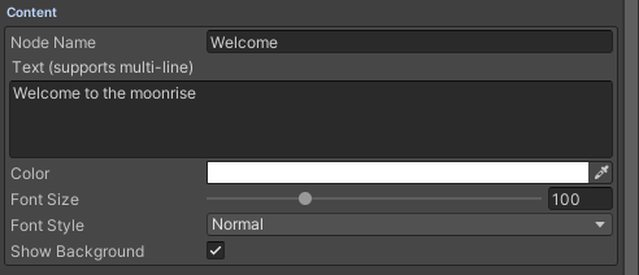
Under Placement and Follow: how stiffly the text follows the viewer's head. Under Viewer Placement: a spot you drag to where you want the text in the viewer's view, with Reset placement to return it to Dreamer Pro's automatic spot.
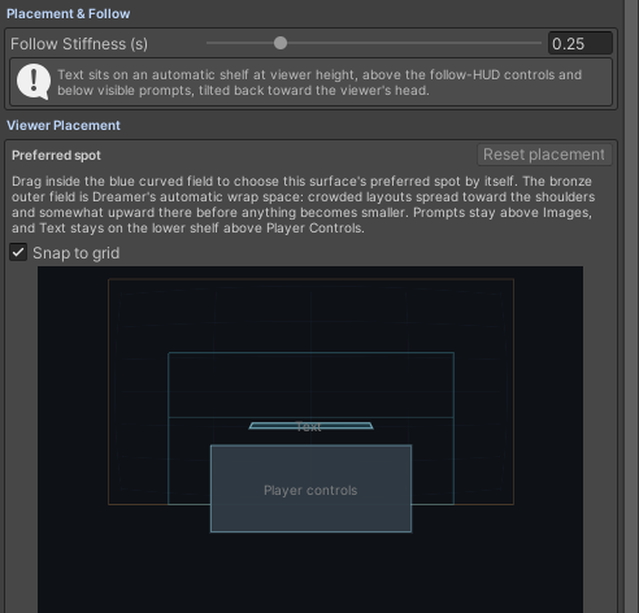
Right-click the Text track's label for global defaults.
Watch for: text ducks under a prompt and moves aside for the player controls. In VR it can appear on the viewer's hand instead. See Viewer Surfaces on Hand in the Dream settings chapter.
Prompt#
A Prompt asks each viewer a question and remembers their answer.
Settings: the Prompt Text.
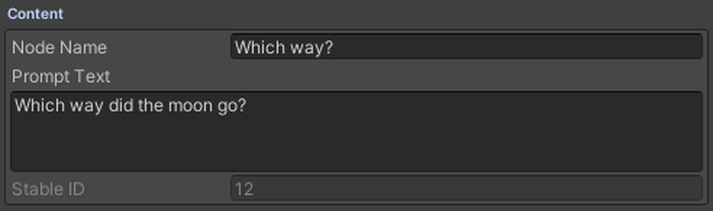
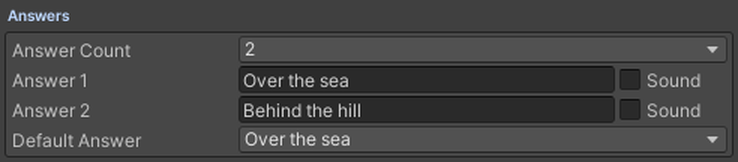
Under Answers: Answer Count, up to four; each answer's text and an optional sound that plays when it is chosen; and the Default Answer, which is chosen for a viewer who does not answer before the node ends.
The card shows a countdown that drains as the node runs out. Up to two prompts can be up at once.
An answer is a condition. Any other node can require a certain answer to a certain prompt, so the show branches. See Conditions in the editor chapter.
Image#
An Image node shows an image card in front of each viewer.
Settings: the Image and its Opacity.
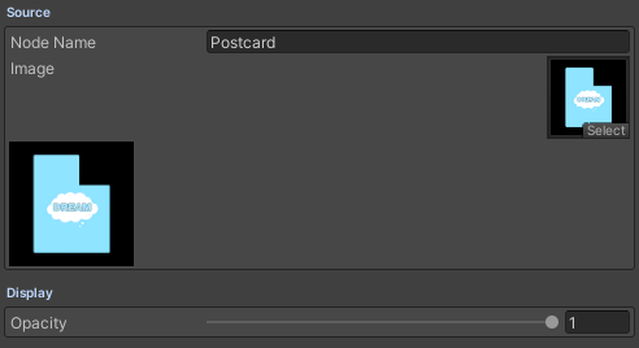
Watch for: up to four images can be up at once. One shows large; two sit side by side; three form a pyramid; four form a grid. Images can also appear on the viewer's hand in VR. If an image card shows without its frame, the node's panel offers Rebuild Image Cards, which rebuilds the matte, outline and shadow around every card.
Group#
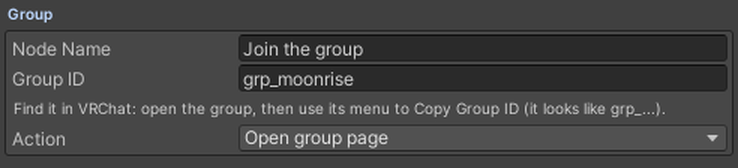
A Group node opens a VRChat group for the viewer at its start.
Settings: the Group ID and the Action: open the group page, open the join or listing page, or open the group store.
Voice#
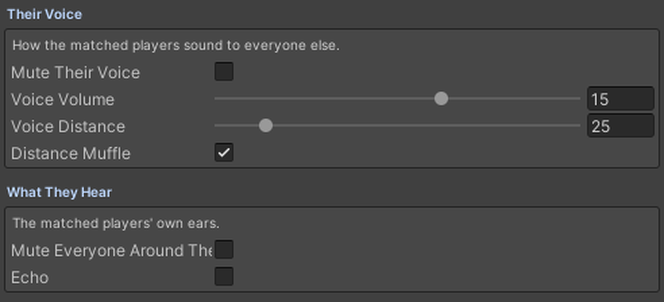
A Voice node changes how players sound while it plays. See the Sound and Voice chapter.

Settings: Mute Their Voice, Voice Volume, Voice Distance, Distance Muffle, Mute Everyone Around Them, and Echo.
Presence, Toggles, Mechanics and Motion#
These four tracks direct a Dreamwalker, a recorded performer. They are covered together in the Dreamwalkers chapter.
- Presence puts the performer on stage for that window, playing that node's recording.
- Toggles turns parts of the performer on or off for that window: clothes, hair, props.
- Mechanics makes the performer react to each viewer: eyes, head or whole body turning toward them, and lets visitors pose the performer.
- Motion walks or teleports the performer from one place to another.
Animation#
An Animation node plays an animation clip on an object.
Settings: the Source Clip; the Target Root, the object it animates; Clip In, where in the clip to start; Speed Multiplier; Playback, once or looping; Bake Rate; and which of position, rotation and scale to animate.
Animation data is baked for the world. Press Bake Animation Data after changing a clip. The upload check refuses a world whose animation data is missing or stale. The editor preview plays from the source clip.
Guidance#
A Guidance node points a viewer at something, or draws them a path. It never turns, moves or teleports them.

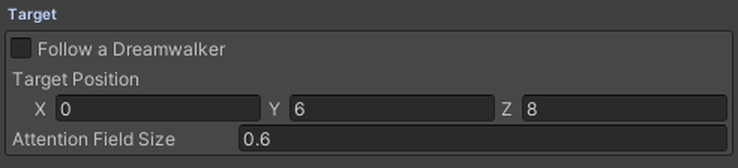
Look Here: an arrow points toward a target. Use a fixed Target, or turn on Follow a Dreamwalker and pick one. Attention Field Size sets how generously looking near the target counts. When the viewer has looked at it for a moment, the arrow goes. A hidden or missing performer hides the cue instead of pointing at nothing.
Go Here: a destination and an Arrival Radius. Dreamer Pro draws a straight dotted path on the floor from the viewer's own position. It is a hint, not navigation, so the straight path can cross walls. Inside the radius the path goes; step out and it comes back.
Under When to Show, Reappear delay sets how long after the viewer looks away the arrow comes back.

Watch for: guidance stays hidden during loading, the intro cards and prompts.
Camera#
A Camera node frames a shot. The viewer is sealed inside a black shell with one window on the world, and the world moves behind that window to show what you framed. The viewer's head stays free to look around the window.
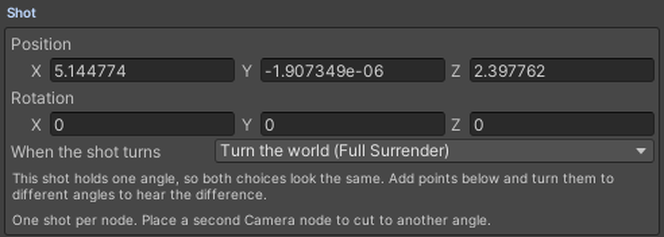
Settings on the node: the shot's Position and Rotation, and "When the shot turns": turn the world (Full Surrender) or move the window (Soft Surrender).
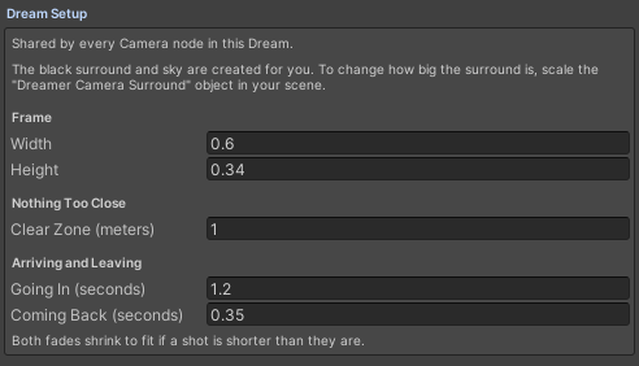
Settings under Dream Setup, shared by every Camera node in the Dream: the Frame's Width and Height, the Clear Zone, which pushes the near edge of the picture out so nothing clips, and the Going In and Coming Back times. Change one of those and every shot in the Dream changes.
A shot can travel. Press Add Point to give the node more points, each with its own position and rotation. The shot moves through them over the node's length at an even speed, easing in and out once across the whole move. Remove takes a point away.

During a shot the player controls leave wherever they sat and travel to a spot just below the window, then come back when the shot ends. If the viewer turns away from the window, an arrow points them back. Two Camera nodes back to back cut from one shot to the next.
Watch for: Clear Zone hides the viewer's own hands, which is why the controls travel. The viewer cannot walk during a shot. A teleport inside a shot is skipped.
Vision FX#
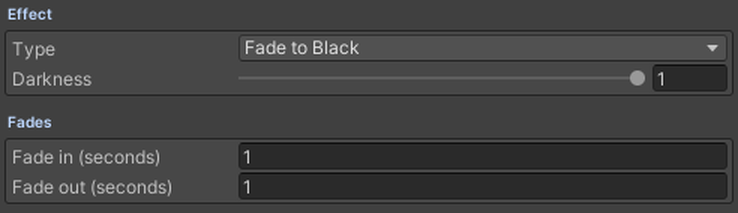
A Vision FX node acts on the viewer's sight. Its one effect is Fade to Black: the view fades to black over the fade-in, holds, and fades back over the fade-out.
Settings: the Type, Fade to Black; Darkness, from 0 to 1; Fade in and Fade out in seconds.
Where two Vision FX nodes overlap, the darker one wins. The darkness at any moment is worked out from the timeline, so scrubbing, seeking and joining late all land on the right darkness. Nothing fades while the Dream is waiting to start. At full darkness nothing shows through, not the world and not the player controls.